




If you have been following travel advice for the last decade, you have almost certainly been told one golden rule: Always roll your clothes. It saves space, prevents wrinkles, and is the hallmark of a seasoned traveler.
But what if that advice is actually wrong—at least when it comes to compression packing cubes?
According to travel content creator Christy the GenX Gypsy, the rolling method might be wasting valuable space in your luggage. In her latest video, "You're Packing Cubes WRONG!", she debunks the rolling myth and introduces a game-changing technique: the "Fold to Fit" method.
Here is a breakdown of why you might be using your packing cubes wrong and how to fix it for your next trip.
The Problem with "Rolling" in Compression Cubes
Compression packing cubes work differently than standard packing cubes or vacuum bags. They rely on a double-zipper system: one zipper closes the bag, and the second zipper compresses the air out to flatten the contents.
Christy points out that when you roll clothes, you create cylindrical shapes that don't sit perfectly flush against each other. This creates "dead space" inside the cube. Furthermore, when you compress rolled clothes, they can get "mushed down" in a way that actually increases wrinkling, especially with synthetic fabrics.
The Solution: The "Fold to Fit" Method
After years of trial and error with army folds, KonMari, and rolling, Christy discovered that the most efficient way to pack a compression cube is to fold your garments to the exact dimensions of the cube.
How it works:
- Open the Cube Flat: Lay your compression cube open to gauge the surface area.
-
Fold to Dimensions: Instead of a standard fold, fold your jeans, sweaters, or shirts specifically so they match the length and width of the cube.
- Stack Like Lasagna: Layer the items flat on top of one another. Because you have folded them to size, there should be no gaps around the edges.
- Compress: Zip the closure zipper, then use the compression zipper to squeeze the air out.
The Result: You utilize every square inch of the cube's volume, and your clothes come out flatter and less wrinkled because they haven't been twisted or bunched up.
Choosing the Right Gear: Why Structure Matters
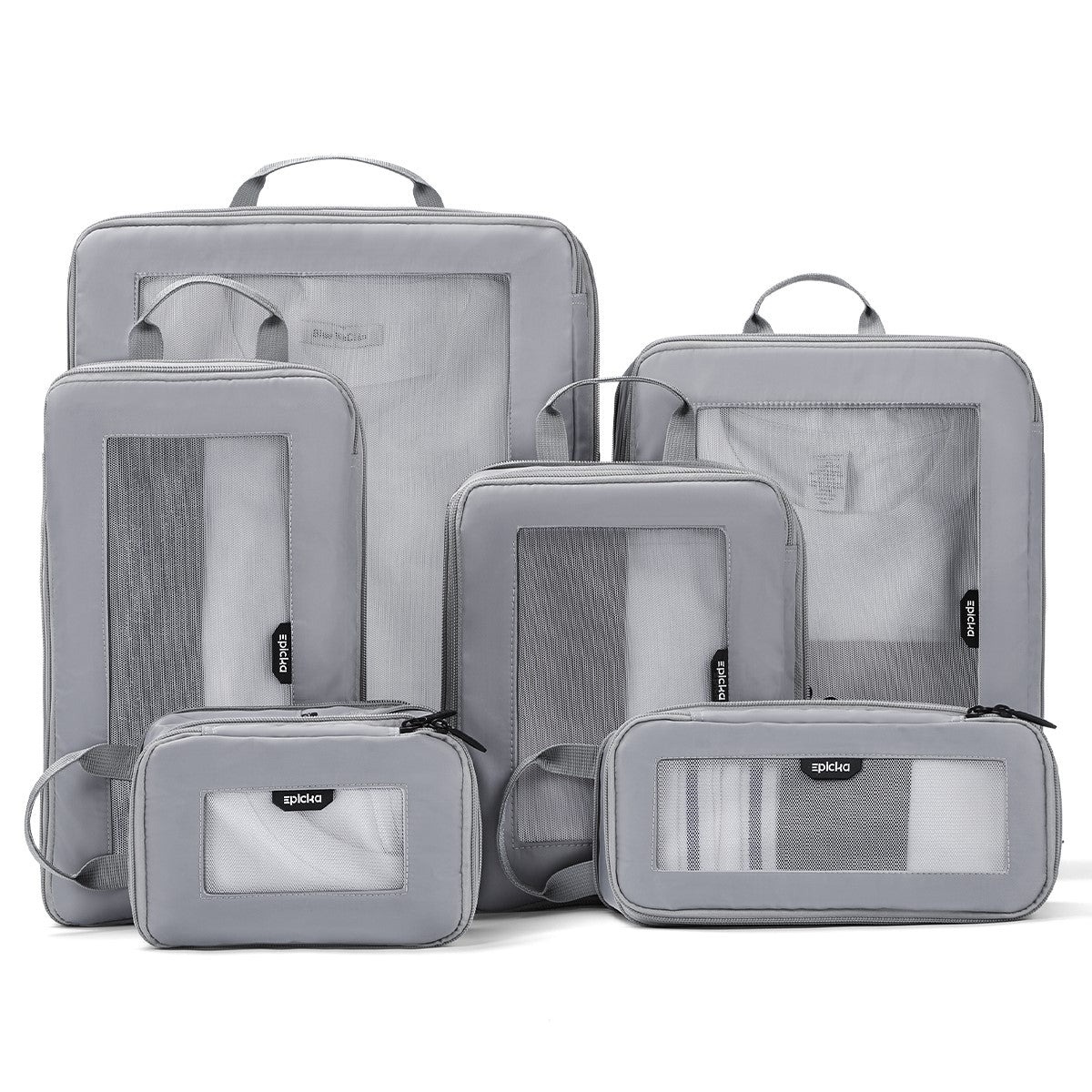
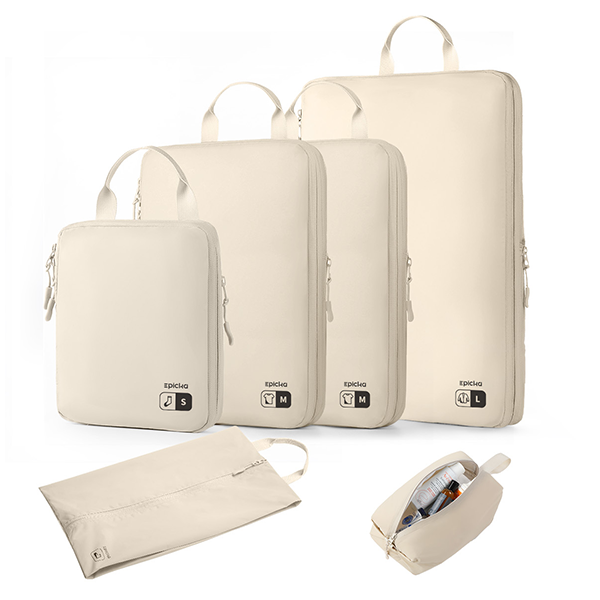
To execute this method effectively, the quality of your packing cube matters. In her demonstration, Christy highlights the Epicka TripCozy Compression Cubes for packing bulkier items like jeans and sweaters.
Why are they better for the "Fold to Fit" method?
- Deeper Inset & Sturdier Material: unlike thinner nylon cubes, the Epicka cubes have a "deeper inset" and use a heavier, sturdier material. This structure holds the shape of your folded clothes better, allowing you to stack thicker items like denim without the bag bulging awkwardly.
- Visibility: The mesh top allows you to see exactly what is inside without unzipping—a crucial feature when you are living out of a suitcase.
Vacuum Bags vs. Compression Cubes
Christy also addresses why she chooses compression cubes over the popular plastic vacuum bags. While vacuum bags save space, they come with three major downsides:
- Dependency on Tools: You often need a pump or vacuum to reseal them for the trip home.
- Durability: The plastic tends to break down after a few uses, letting air leak back in.
- Wrinkles: The intense suction crushes clothes, leading to severe wrinkling.
The Takeaway
If you want to maximize your carry-on space in 2026, it might be time to retire the "roll" and start folding. By using the Fold to Fit method with a structured compression cube like the Epicka Trip Cozy, you can pack more efficiently, keep your clothes neater, and stop wrestling with your suitcase zipper.
Want to see the Fold to Fit method in action? Watch Christy’s full tutorial here.
Hinterlasse einen Kommentar
Diese Website ist durch hCaptcha geschützt und es gelten die allgemeinen Geschäftsbedingungen und Datenschutzbestimmungen von hCaptcha.