
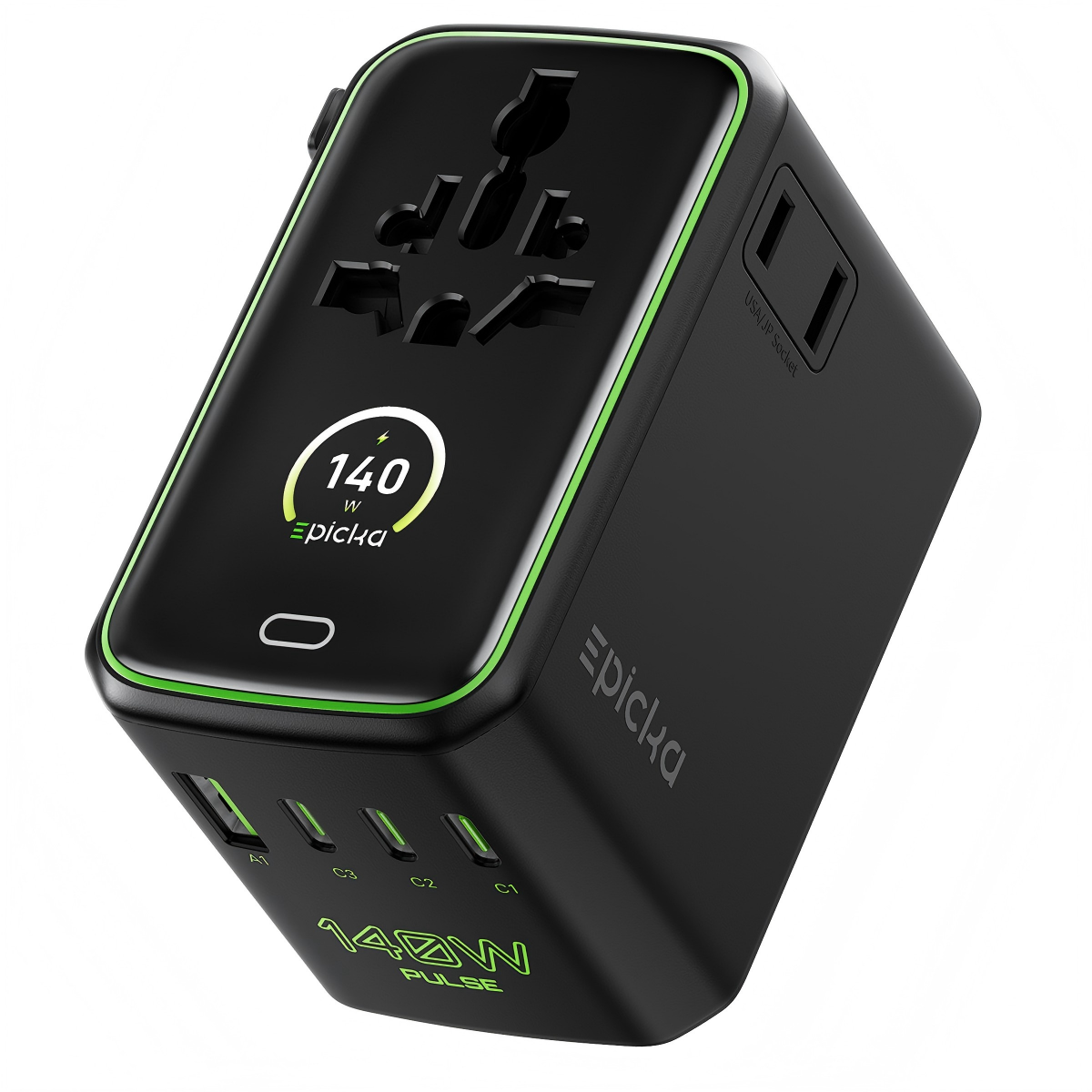
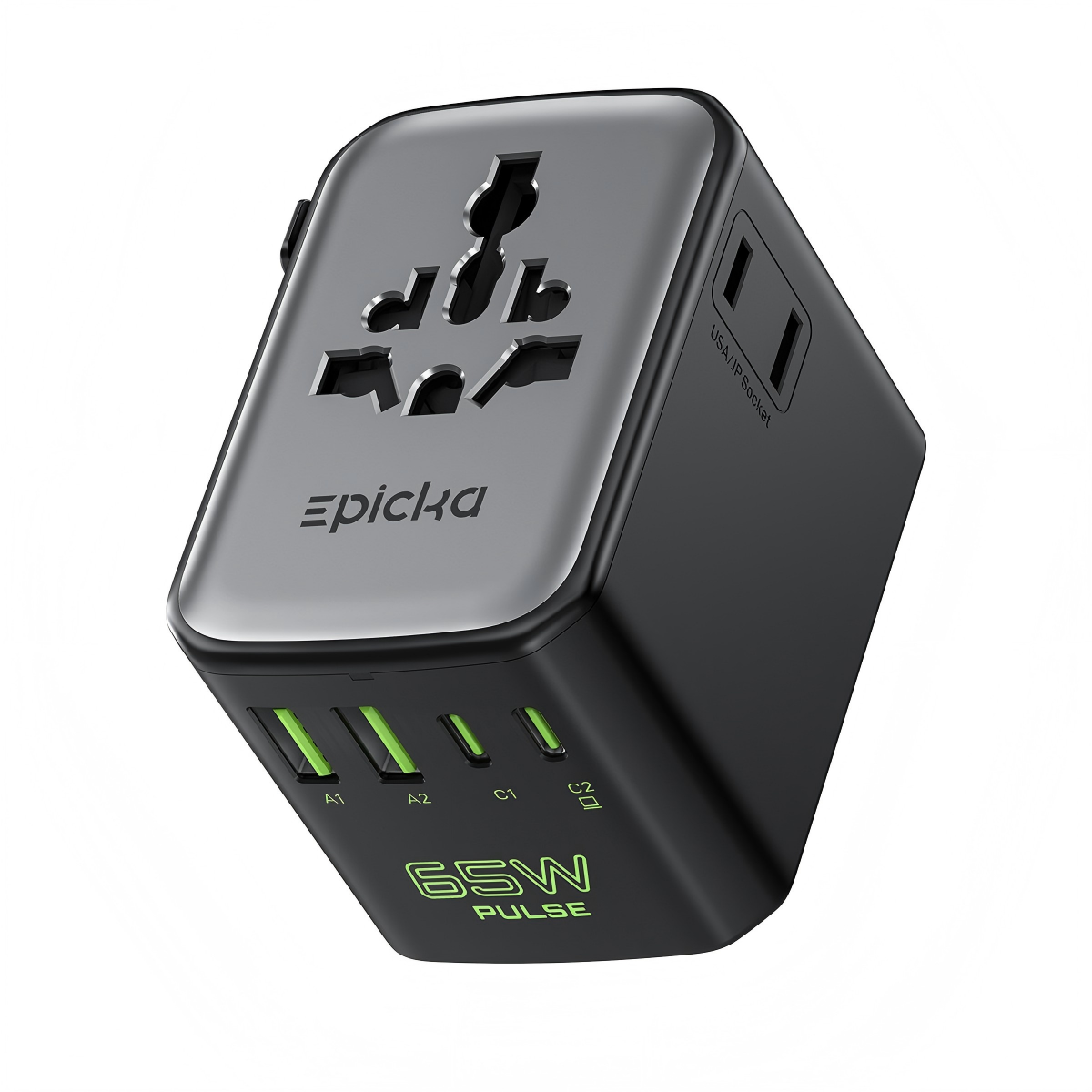
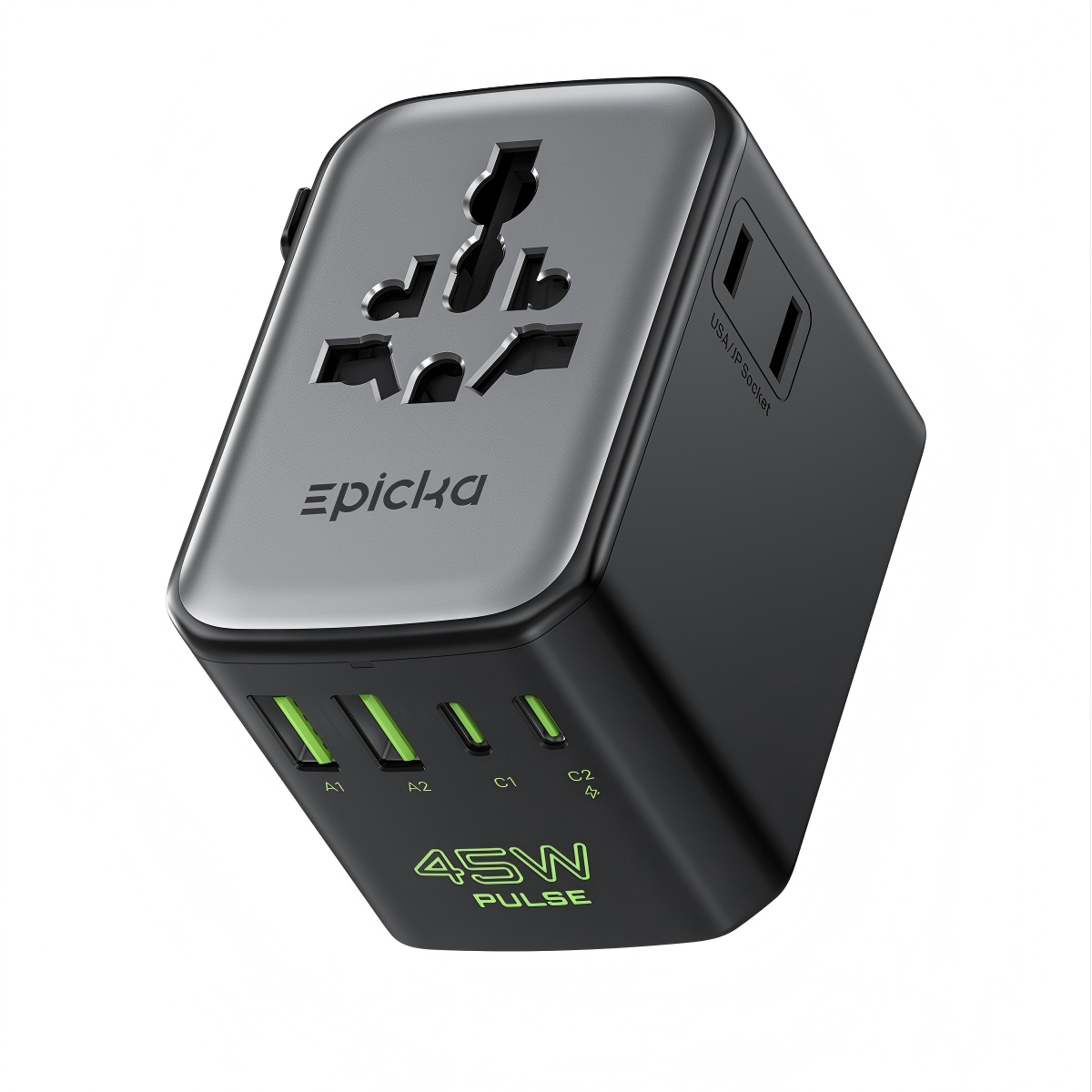
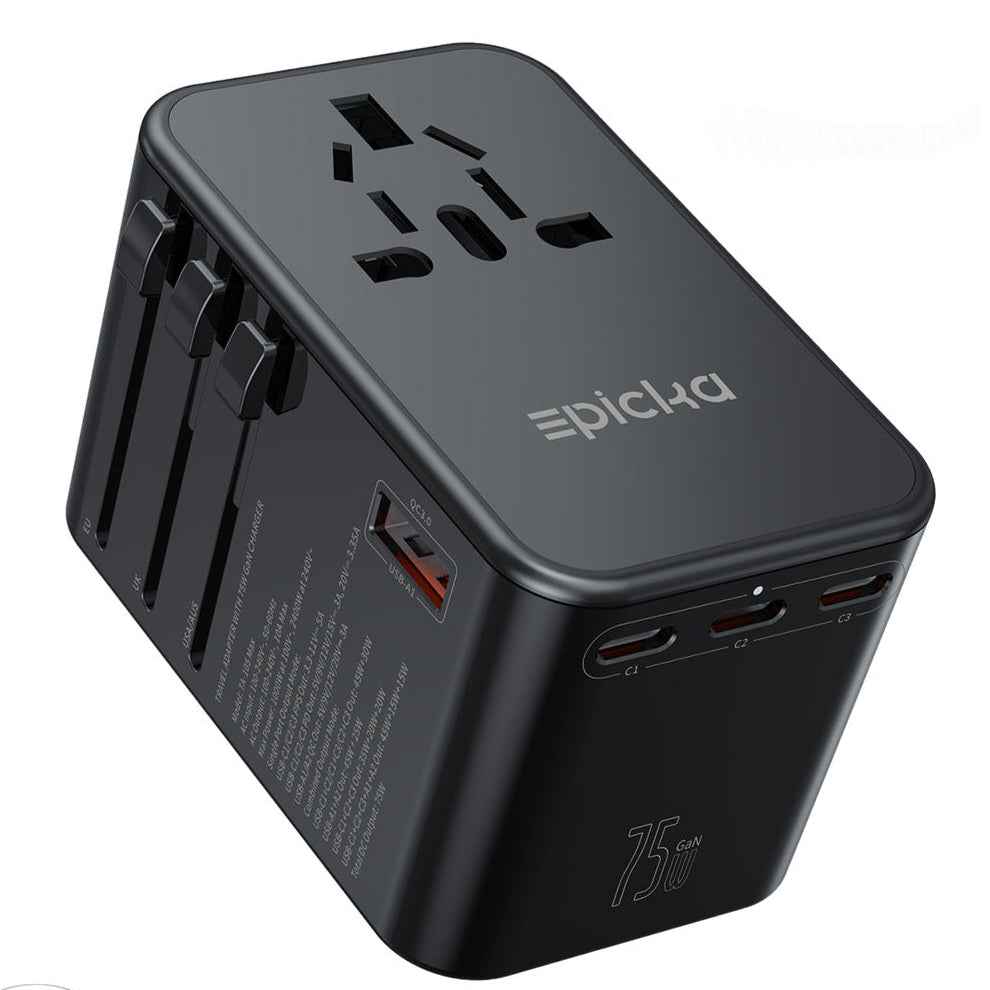
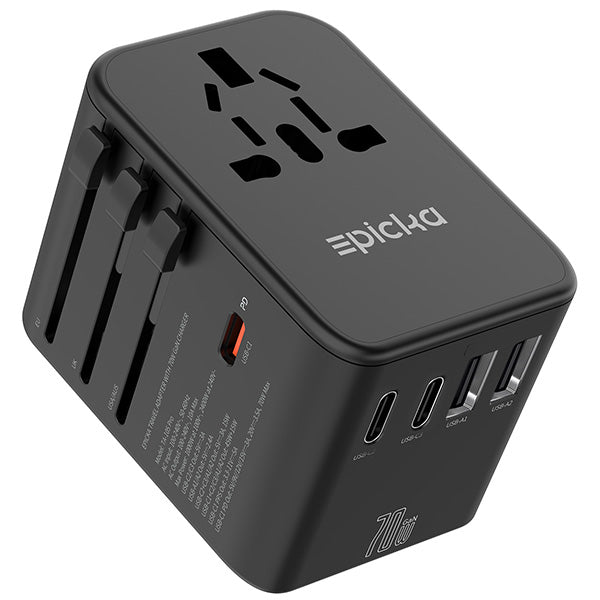
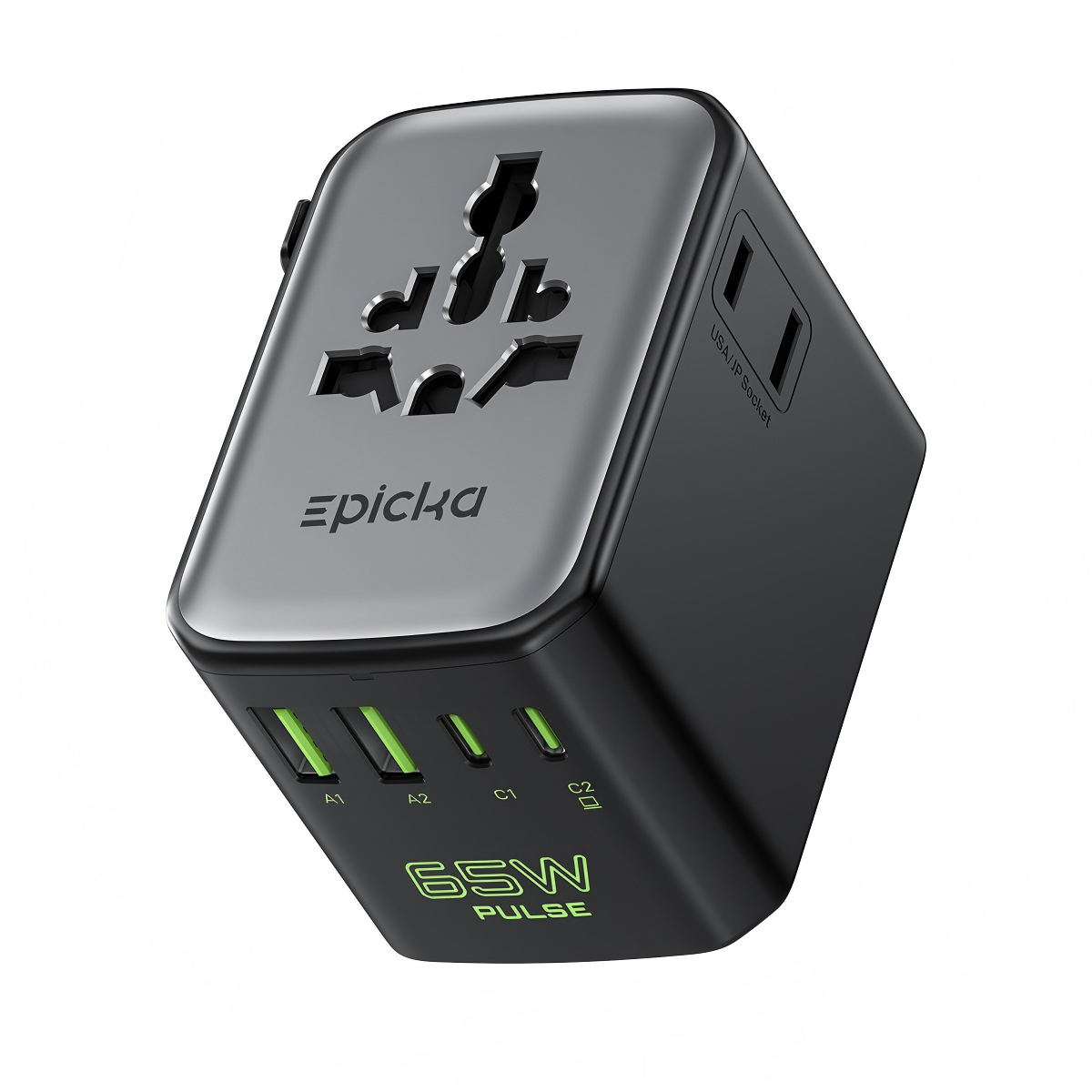
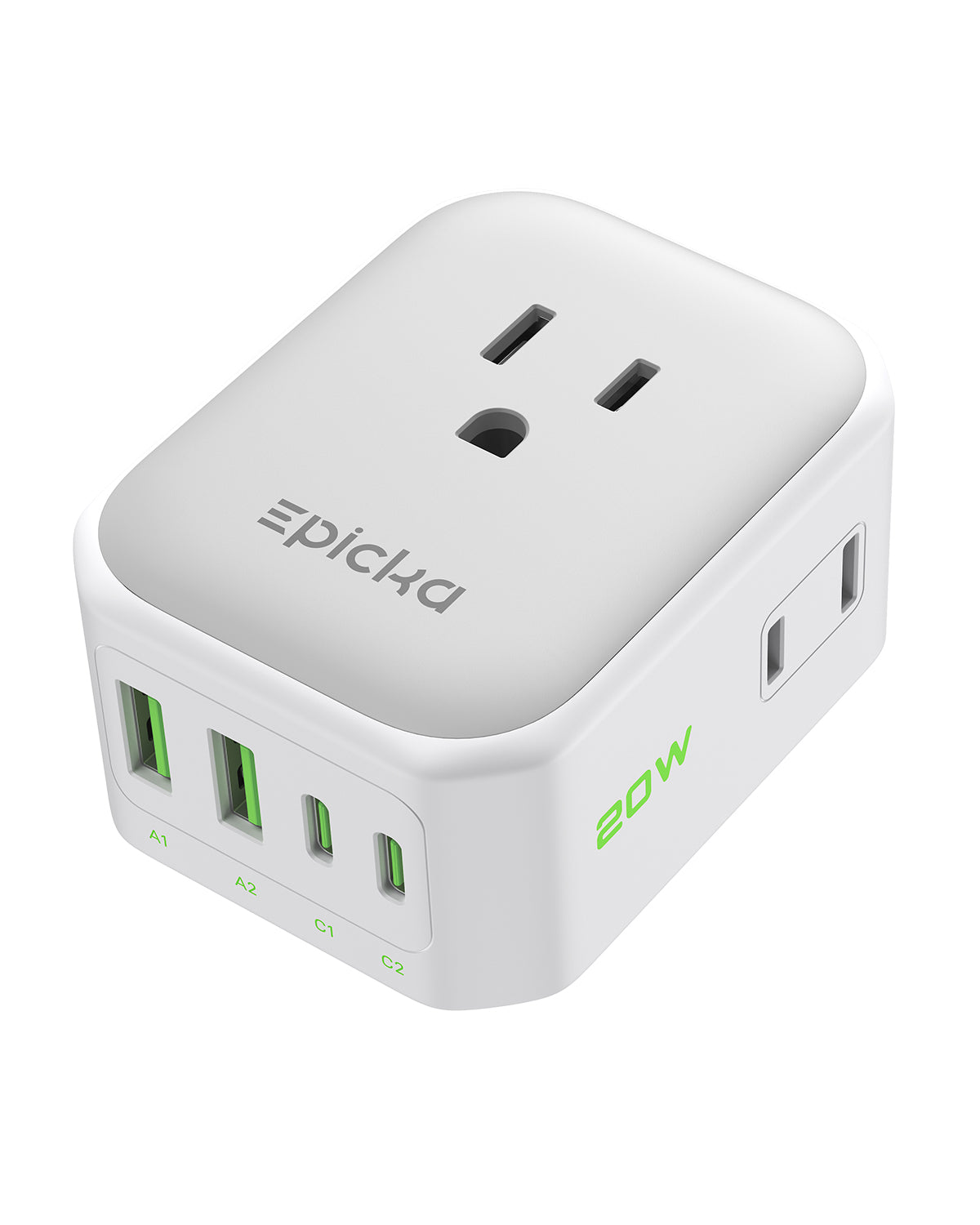



Please read this manual carefully before using our adapter and keep it for future reference.

IN THE BOX
- Converter x1
- Carrying Bag x1
- Power Cord with Type B Plug x1
- User Manual x1
- Type C Plug x1
PRODUCT OVERVIEW
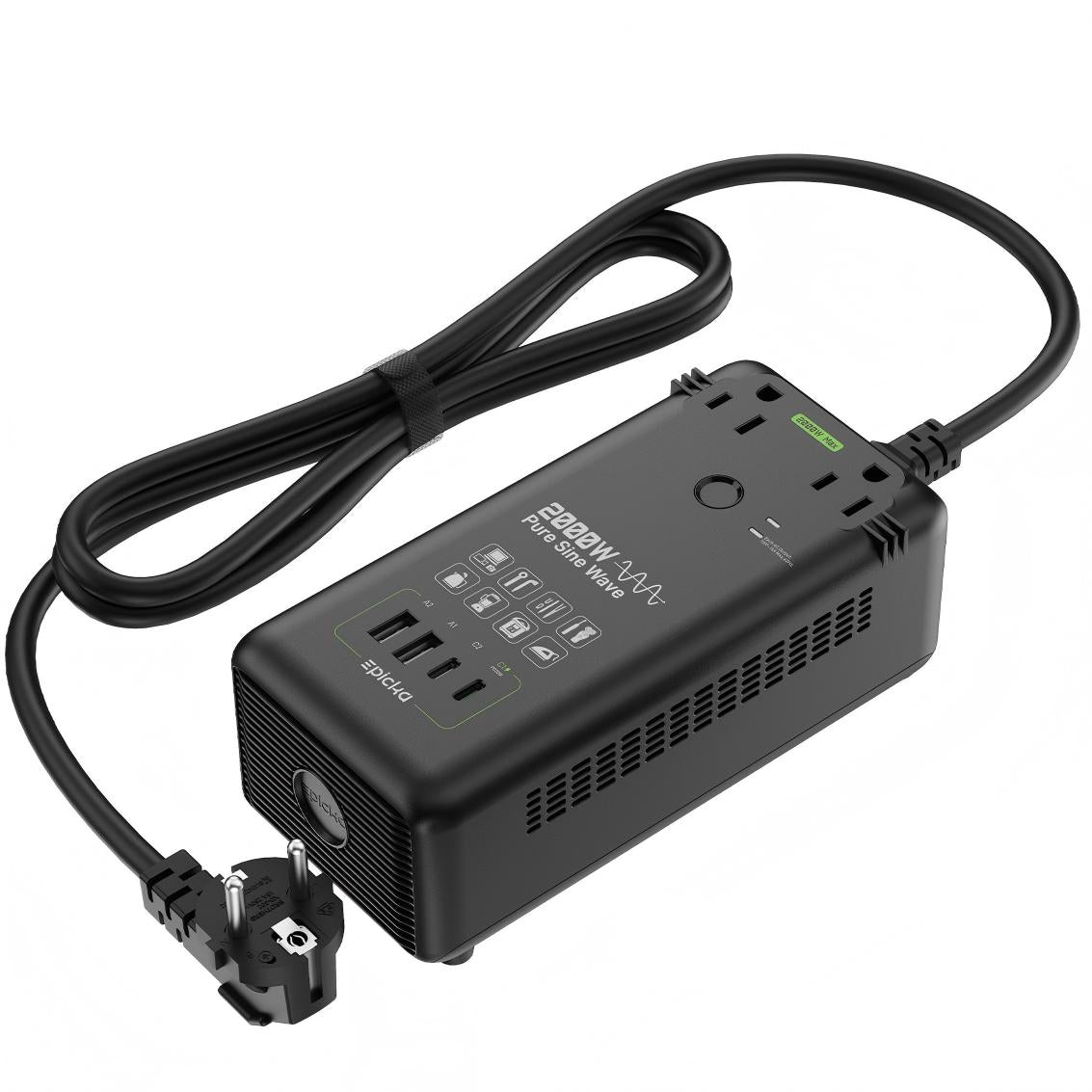
- Voltage Converter: Converts input voltage 200V to 110 V AC, convenient especially for US/UK customers for North American use.
- Step-Down Power: The total power of the Type B sockets can reach up to 2000 W.
- Over AC Series: Temperature-based LED power indicators.
- Power Control: On/Off power switch with LED power indicator.
-
• Advanced Protection: Over AC Type B overheat, USB port (USB and USB-C), and short circuit protection.
SPECIFICATIONS
- Product Name: 2000W Pure Sine Wave Voltage Converter
- Model: E-P6201
- Dimensions: 155 x 78.5 x 55 mm/6.10 x 3.09 x 2.17 inches
- Weight: 830g/1.83 lb
- AC Input Cord: Type E/F, Length: 4.0 ft (1.2 m)
- Plug Types Included: Type C, G, I
Note:
Do NOT exceed the total output power of 2000 W. As this device is a step-down only converter, do not use it to step up voltage. When Power indicator flashes, the device has reached the maximum load.
IMPORTANT NOTES
- Use only with listed home devices and below 2000 W.
- For indoor use only.
- Do not use in humid/wet environments.
⚠ WARNING: DO NOT COVER. Ensure proper ventilation for safe operation.

AC Input: 230V~15A Max, 50/60Hz
Each AC Output: 115V~15A Max, 60Hz
Total AC output: 2000W Max
Input: 100-240V~,50/60Hz, 0.6A (For USB ports load)
USB Outputs:
C1: 5.0V⎓ 3.0A, 9.0V⎓ 2.2A, 12.0V⎓ 1.67A 20.0W MAX
C2: 5.0V⎓ 3.0A 15.0W MAX
A1/A2: 5.0V⎓ 2.4A 12.0W MAX
C1+C2/A1/A2: 5.0V⎓ 3.0A 15.0W MAX
C1+A1+A2: 5.0V⎓ 3.0A 15.0W MAX
A1+A2: 5.0V⎓ 3.0A 15.0W MAX
C1+C2+A1+A2: 5.0V⎓ 3.0A 15.0W MAX
Indicator Status
|
Indicator |
Description |
|
Blue (steady) |
Standby mode |
|
Red (flashing) |
Fault protection activated |
|
White (flashing) |
Below the 1000W threshold |
|
White (steady) |
Above the 1000W threshold |
USING THE CONVERTER
1. Confirm the appliance plug is the correct power (A or B).
2. Select the output off the power cord; the power must port.
3. Plug the converter into an outlet. The red indicator lights up,indicating that the converter has entered standby mode.At this time, the USB-A and USB-C ports are active but theType B sockets are unavailable.
 4.
4. Press and hold the Power button for 3 seconds. The red indicator light illuminating indicates the converter is operating/standby mode, indicating that the converter is on. The blue indicator light indicates the device is working normally.

Tips:
If the indicator flashes, the converter is in fault mode. The red flashing means the fan is working at high speed on. If the fault remains, press the Power button to reset. If the converter overheats, the built-in protection will shut it down automatically. When the power at the converter exceeds 100W to the temperature exceeds the limit, the converter will shut down automatically until the temperature decreases.
FREQUENTLY ASKED QUESTIONS (FAQ)
Q: Can I use this converter with a hair dryer, steam iron, or electric razor?
A: Yes, as long as the appliance's total output does not exceed 2000 W.
Q: Why does the converter seem to produce a humming sound during operation?
A: A slight humming sound is normal when the converter board is operating normally. For continuous operations, we recommend a maximum load at 1800 W to ensure product safe operation.
Q: Why does the converter become warm or produces a humming sound during operation?
A: If the converter overheats, the built-in protection will not work and the device may shut down. If the converter overheats, try cooling down, plugging it in for a while, and then plug it back in.
Q: How do I know which plug type is used in different countries or regions?
A: Please refer to the Appendix A table for the complete list.
Q: Can I charge my phone while using the AC outlet at the same time?
A: Yes, as long as the total load remains below 2000 W.
Q: What should I do if the converter shuts off automatically?
A: Please see the 'Indicator' and 'TIPS FOR USING THE CONVERTER' sections for more details.
Warranty Coverage Exclusions:
This limited warranty applies only to the Epicka 2000W Pure Sine Wave Voltage Converter. The following are NOT covered under this warranty:
- Damage resulting from misuse, abuse, or improper installlation
- Use with appliances exceeding 2000 W
- Damage to devices connected to the converter
- Attempts to open, modify, or repair the device
- Damage caused by accidents, fire, flood, or natural disasters
- Cosmetic wear (scratches, dents, discoloration, etc.)
- Commercial or industrial use
This warranty applies only to the voltage converter itself aand does not cover damage to connected devices. All warranty claims require proof of purchase. Epicka reserves the right to determine warranty eligibility.
APPENDIX A – COMPATIBLE COUNTRIES & REGIONS
The following table lists compatible countries and regions with their corresponding plug types and voltage standards.
|
Country / Region |
Plug Type(s) |
Voltage |
|
Burkina Faso |
Type C, E |
220V |
|
Burundi |
Type C, E |
220V |
|
Cabo Verde |
Type C, B |
220V |
|
Cameroon |
Type C, E |
220V |
|
Central African Republic |
Type C, E |
220V |
|
Chad |
Type C, E |
220V |
|
Comoros |
Type C, E |
220V |
|
Congo (Brazzaville) |
Type C, E |
230V |
|
Congo (DRC) |
Type C |
220V |
|
Côte d'Ivoire (Ivory Coast) |
Type C, E |
220V |
|
Djibouti |
Type C, E |
220V |
|
Egypt |
Type C |
220V |
|
Equatorial Guinea |
Type C, E |
220V |
|
Eritrea |
Type C, L |
230V |
|
Eswatini |
Type M |
230V |
|
Ethiopia |
Type C, L, D |
220V |
|
Gabon |
Type C |
220V |
|
Gambia |
Type G |
230V |
|
Ghana |
Type D, G |
230V |
|
Guinea |
Type C, K |
220V |
|
Guinea-Bissau |
Type C |
220V |
|
Kenya |
Type G |
240V |
|
Lesotho |
Type M |
220V |
|
Liberia |
Type A, B |
120V |
|
Libya |
Type C, L |
127/220V |
|
Madagascar |
Type C, E |
220V |
|
Malawi |
Type G |
230V |
|
Mali |
Type C, E |
220V |
|
Mauritania |
Type C |
220V |
|
Mauritius |
Type G |
230V |
|
Morocco |
Type C, E |
220V |
|
Mozambique |
Type C, F, M |
220V |
|
Namibia |
Type D, M |
220V |
|
Niger |
Type A, B, C, E |
220V |
|
Nigeria |
Type D, G |
240V |
|
Rwanda |
Type C, J |
230V |
|
São Tomé and Príncipe |
Type C, F |
220V |
|
Senegal |
Type C, D, E, K |
230V |
|
Seychelles |
Type G |
240V |
|
Sierra Leone |
Type D, G |
230V |
|
Somalia |
Type C |
220V |
|
South Africa |
Type D, M, N |
230V |
|
South Sudan |
Type C, D |
230V |
|
Sudan |
Type C, D |
230V |
|
Tanzania |
Type D, G |
230V |
|
Togo |
Type C, E |
220V |
|
Tunisia |
Type C, E |
230V |
|
Uganda |
Type G |
240V |
|
Zambia |
Type G |
230V |
|
Zimbabwe |
Type D, G |
240V |
|
Afghanistan |
Type C, F |
220V |
|
Armenia |
Type C, F |
230V |
|
Azerbaijan |
Type C, F |
220V |
|
Bahrain |
Type G |
230V |
|
Bangladesh |
Type C, D, G, K |
220V |
|
Bhutan |
Type C, D, F |
230V |
|
Brunei |
Type G |
240V |
|
Cambodia |
Type A, C, G |
230V |
|
China |
Type A, C, I |
220V |
|
Cyprus |
Type G |
240V |
|
Georgia |
Type C, F |
220V |
|
Hong Kong |
Type G |
220V |
|
India |
Type C, D, M |
230V |
|
Indonesia |
Type C, F |
230V |
|
Iran |
Type C, F |
220V |
|
Iraq |
Type C, D, G |
230V |
|
Israel |
Type C, H |
230V |
|
Japan |
Type A, B |
100V |
|
Jordan |
Type B, C, D, F, G, J |
230V |
|
Kazakhstan |
Type C, F |
220V |
|
Kuwait |
Type G |
240V |
|
Kyrgyzstan |
Type C, F |
220V |
|
Laos |
Type A, B, C, E, F |
230V |
|
Lebanon |
Type C, D, G |
230V |
|
Macau |
Type G |
220V |
|
Malaysia |
Type G |
240V |
|
Maldives |
Type D, G, J, K, L |
230V |
|
Mongolia |
Type C, E |
230V |
|
Myanmar |
Type C, D, F, G, I |
230V |
|
Nepal |
Type C, D |
230V |
|
North Korea |
Type C, F |
220V |
|
Oman |
Type G |
240V |
|
Pakistan |
Type C, D, G |
230V |
|
Palestine |
Type C, H |
230V |
|
Philippines |
Type A, B, C |
220V |
|
Qatar |
Type G |
240V |
|
Russia |
Type C, F |
220V |
|
Saudi Arabia |
Type A, B, G |
220V |
|
Singapore |
Type G |
230V |
|
South Korea |
Type C, F |
220/110V |
|
Sri Lanka |
Type D, G |
230V |
|
Syria |
Type C, E, L |
220V |
|
Taiwan |
Type A, B |
110V |
|
Tajikistan |
Type C, F |
220V |
|
Thailand |
Type A, B, C |
220V |
|
Timor-Leste |
Type C, E, F, I |
220V |
|
Turkey |
Type C, F |
220V |
|
Turkmenistan |
Type B, C, F |
220V |
|
United Arab Emirates |
Type G |
220V |
|
Uzbekistan |
Type C, F |
220V |
|
Vietnam |
Type A, C, G |
220V |
|
Yemen |
Type A, D, G |
230V |
|
Albania |
Type C, F |
230V |
|
Andorra |
Type C, F |
230V |
|
Austria |
Type C, F |
230V |
|
Belarus |
Type C, F |
220V |
|
Belgium |
Type C, E |
230V |
|
Bosnia and Herzegovina |
Type C, F |
230V |
|
Bulgaria |
Type C, F |
230V |
|
Croatia |
Type C, F |
230V |
|
Czech Republic |
Type C, E |
230V |
|
Denmark |
Type C, E, K |
230V |
|
Estonia |
Type C, F |
230V |
|
Finland |
Type C, F |
230V |
|
France |
Type C, E |
230V |
|
Germany |
Type C, F |
230V |
|
Greece |
Type C, F |
230V |
|
Hungary |
Type C, F |
230V |
|
Iceland |
Type C, F |
230V |
|
Ireland |
Type G |
230V |
|
Italy |
Type C, F, L |
230V |
|
Kosovo |
Type C, F |
230V |
|
Latvia |
Type C, F |
230V |
|
Liechtenstein |
Type C, J |
230V |
|
Lithuania |
Type C, F |
230V |
|
Luxembourg |
Type C, F |
230V |
|
Malta |
Type G |
230V |
|
Moldova |
Type C, F |
230V |
|
Monaco |
Type C, E, F |
230V |
|
Montenegro |
Type C, F |
230V |
|
Netherlands |
Type C, F |
230V |
|
North Macedonia |
Type C, F |
230V |
|
Norway |
Type C, F |
230V |
|
Poland |
Type C, E |
230V |
|
Portugal |
Type C, F |
230V |
|
Romania |
Type C, F |
230V |
|
San Marino |
Type C, F, L |
230V |
|
Serbia |
Type C, F |
230V |
|
Slovakia |
Type C, E |
230V |
|
Slovenia |
Type C, F |
230V |
|
Spain |
Type C, F |
230V |
|
Sweden |
Type C, F |
230V |
|
Switzerland |
Type C, J |
230V |
|
Ukraine |
Type C, F |
230V |
|
United Kingdom |
Type G |
230V |
|
Vatican City |
Type C, F, L |
230V |
|
Anguilla |
Type A, B |
110V |
|
Antigua and Barbuda |
Type A, B |
230V |
|
Argentina |
Type C, I |
220V |
|
Aruba |
Type A, B, F |
110V |
|
Bahamas |
Type A, B |
120V |
|
Barbados |
Type A, B |
115V |
|
Belize |
Type A, B, G |
110/220V |
|
Bolivia |
Type A, C |
220V |
|
Brazil |
Type C, N |
127/220V |
|
Canada |
Type A, B |
120V |
|
Chile |
Type C, L |
220V |
|
Colombia |
Type A, B |
110V |
|
Costa Rica |
Type A, B |
120V |
|
Cuba |
Type A, B, C, L |
110/220V |
|
Curacao |
Type A, B |
130V |
|
Dominica |
Type D, G |
230V |
|
Dominican Republic |
Type A, B |
110V |
|
Ecuador |
Type A, B |
120V |
|
El Salvador |
Type A, B |
115V |
|
French Guiana |
Type C, D, E |
220V |
|
Grenada |
Type G |
230V |
|
Guatemala |
Type A, B |
120V |
|
Guyana |
Type A, B, D, G |
120/240V |
|
Haiti |
Type A, B |
110V |
|
Honduras |
Type A, B |
110V |
|
Jamaica |
Type A, B |
110V |
|
Mexico |
Type A, B |
127V |
|
Montserrat |
Type A, B |
230V |
|
Nicaragua |
Type A, B |
120V |
|
Panama |
Type A, B |
120V |
|
Paraguay |
Type C |
220V |
|
Peru |
Type A, C |
220V |
|
Puerto Rico |
Type A, B |
120V |
|
Saint Kitts and Nevis |
Type A, B, D |
230V |
|
Saint Lucia |
Type G |
240V |
|
Saint Vincent and the Grenadines |
Type A, C, E, G, I, K |
230V |
|
Suriname |
Type C, F |
127V |
|
Trinidad and Tobago |
Type A, B |
115V |
|
Turks and Caicos Islands |
Type A, B |
120V |
|
United States |
Type A, B |
120V |
|
Uruguay |
Type C, F, I, L |
230V |
|
Venezuela |
Type A, B |
120V |
|
Virgin Islands (US) |
Type A, B |
110V |
|
Australia |
Type I |
230V |
|
Fiji |
Type I |
240V |
|
Kiribati |
Type I |
240V |
|
Marshall Islands |
Type A, B |
120V |
|
Micronesia |
Type A, B |
120V |
|
Nauru |
Type I |
240V |
|
New Zealand |
Type I |
230V |
|
Palau |
Type A, B |
120V |
|
Papua New Guinea |
Type I |
240V |
|
Samoa |
Type I |
230V |
|
Solomon Islands |
Type G, I |
220V |
|
Tonga |
Type I |
240V |
|
Tuvalu |
Type I |
220V |
|
Vanuatu |
Type C, G, I |
220V |
FCC STATEMENT
This device complies with Part 15 of the FCC Rules. Operation is subject to the following two conditions: (1) This device may not cause harmful interference, and (2) this device must accept any interference received, including interference that may cause undesired operation.
This equipment has been tested and found to comply with the limits for a Class B digital device, pursuant to Part 15 of FCC Rules. These limits are designed to provide reasonable protection against harmful interference in a residential installation. This equipment generates, uses, and can radiate radio frequency energy and, if not installed and used in accordance with the instructions, may cause harmful interference to radio communications.
However, there is no guarantee that interference will not occur in a particular installation. If this equipment does cause harmful interference to radio or television reception, which can be determined by turning the equipment off and on, the user is encouraged to try to correct the interference by one or more of the following measures:
- Reorient or relocate the receiving antenna.
- Increase the separation between the equipment and receiver.
- Connect the equipment into an outlet on a circuit different from that to which the receiver is connected.
- Consult the dealer or an experienced radio/TV technician for help.
Important: You are cautioned that changes or modifications not expressly approved by the party responsible for compliance could void the user's authority to operate the equipment.